 AIGCLIST
SwapperAI
AI fashion model generator: flat-lay photos to model images in minutes
Benchmarks
How SwapperAI scores on agent readiness and AI visibility AI Readiness and GEO Score are platform assessments generated by AIGCLIST after submission.
Decision summary
Overview
A Shopify merchant uploads a flat-lay photo of a linen blazer, shot on an iPhone against a white board. Three thousand miles away, a buyer in Berlin sees the same blazer worn by a model who looks like she walked out of a local lookbook. The merchant never hired a model, never booked a studio, and spent less than a dollar on the image. The pipeline that used to take a week took six minutes.
This AI fashion model generator lands in a market where product photography economics have been breaking for years. Professional model shoots cost $500 to $2,000 per session; a single product listing can need a dozen angles. For small brands and factory-direct sellers launching hundreds of SKUs, the math does not work. SwapperAI is one of a growing cluster of tools betting that AI-generated model imagery can replace much of that spend, not by making it slightly cheaper, but by collapsing the timeline from days to minutes.
As an AI fashion model generator, SwapperAI targets the gap between professional photoshoot budgets and marketplace requirements for model imagery.
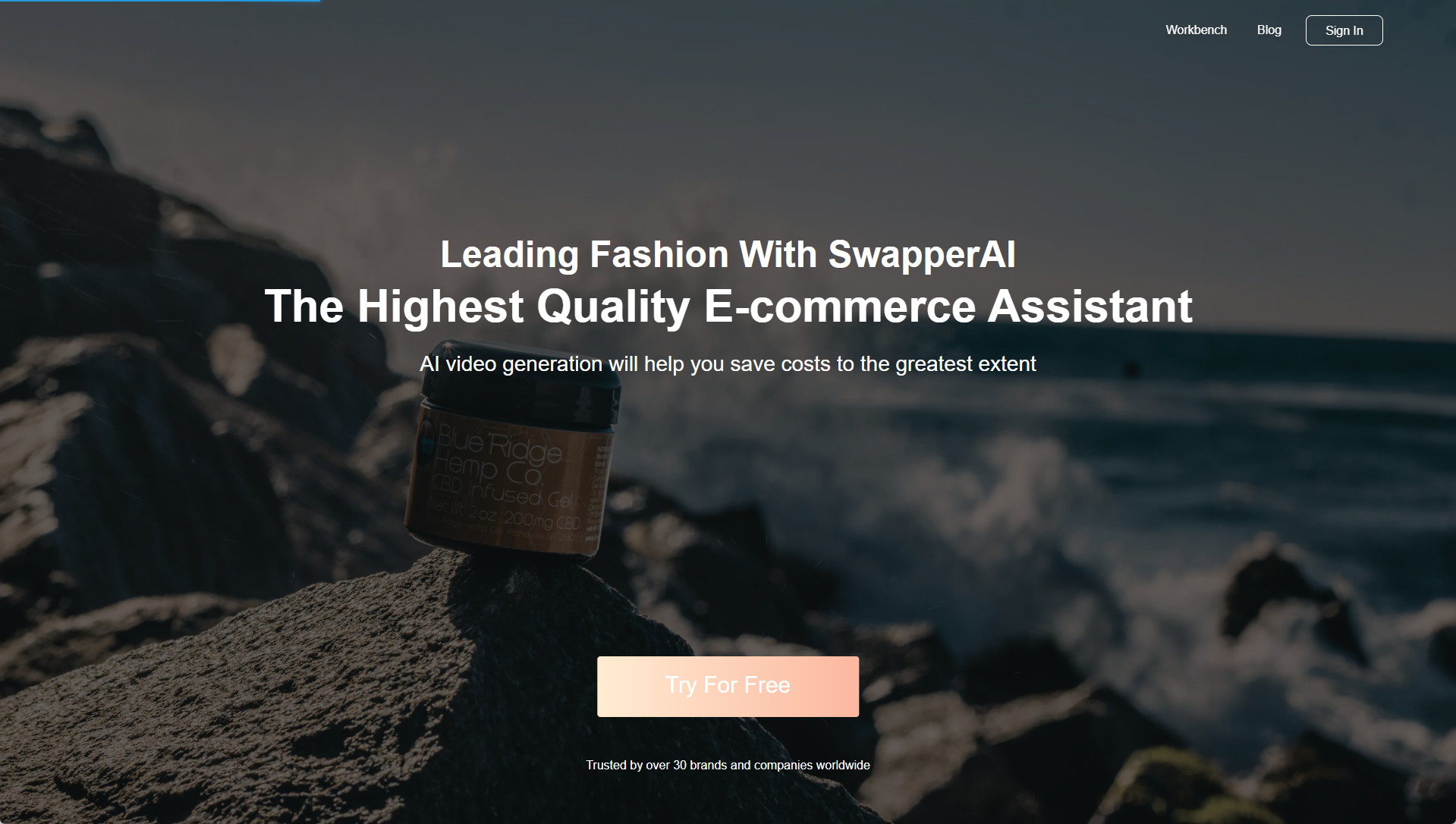
What Swapper Actually Does
SwapperAI is a web-based SaaS platform that generates model-wearing product images from flat-lay or hanging garment photos. You upload a clothing photo, pick a model template or customize one, and the system outputs an image of that model wearing the garment. It also handles face swapping, background removal, and virtual try-on scenarios where a customer photo is mapped onto a product image.
The core pipeline covers four outputs:
- Model image generation: flat-lay or hanging garment becomes model wearing the item, in a scene of your choosing.
- Virtual try-on: customer-uploaded photo becomes same person wearing the selected product.
- Product photo enhancement: clean background, lighting correction, shadow adjustment.
- Video generation (newer): a single static product image becomes a short e-commerce video clip, with the model in motion.
According to the vendor G2 listing, the team includes visual directors who previously worked at global fashion brands Bestseller and Bananain, and the platform templates are designed to reflect local aesthetics across major trading markets, meaning a seller targeting the Middle East gets culturally appropriate styling, not a one-size-fits-all Western model (G2 marketplace, g2.com/marketplace/tools/swapper-ai).
The Economics Pitch
SwapperAI claims its core value is cost reduction. The vendor states on its G2 profile that users save at least 6 times the cost per image compared to traditional photoshoots and that the turnaround drops from a typical 3-to-7-day production cycle to as little as 5 minutes. These are vendor figures, not independently audited, but the directional claim is consistent with what competing tools in this space assert.
The pricing model is freemium with a credit system. New users get 120 free credits to test the platform. Paid plans start at $9.99 per month on a monthly-and-credits model, according to directory listing AI Mojo (aimojo.io/tools/swapper-ai), while TopAI.tools (topai.tools/t/swapper) lists the starting price at $14.99 per month. The discrepancy likely reflects different plan tiers or promotional pricing. All pricing data is as of July 2025; check the vendor site for current rates.
The vendor also reports partnerships with over 30 clothing brands and 13 clothing factories, alongside long-term relationships with photography and design professionals, per its AI Tools FYI listing (aitools.fyi/swapper). These partnership figures are vendor-claimed and have not been independently confirmed.
How It Works
The technical workflow is straightforward: upload an image, select a model from the template library or generate a custom AI model with specified attributes such as age, skin tone, body type, and pose, and the system composites the garment onto the model. The output is a photorealistic product image with adjustable backgrounds.
SwapperAI also supports batch processing. A merchant with 50 SKUs can upload a bulk set of flat-lay images, select a consistent model profile, and generate an entire catalog worth of model imagery in one session. This is where the time-compression argument becomes concrete: a 50-product shoot that might require two full studio days and a week of post-production becomes a few hours of upload-and-review.
The face-swap feature operates separately from the model-generation pipeline. It maps a person face onto an existing model image, which powers the virtual try-on experience. This is distinct from the flat-lay-to-model pipeline and closer to what dedicated face-swapping tools offer, though SwapperAI integrates both into a single workflow aimed at e-commerce conversion.
On the output side, SwapperAI delivers images at resolutions suitable for marketplace listings. The vendor has not published specific resolution caps or file format constraints, but typical e-commerce platforms require 1000px minimum on the longest side for zoom functionality, and the generated outputs appear to meet that threshold based on sample imagery shown across directory listings.
One practical consideration is skin tone and body-type representation. The model template system allows customization of age, skin tone, body type, and pose, which means brands can generate inclusive model sets without running separate photoshoots for each demographic. Whether the AI consistently renders different skin tones accurately across fabric types and lighting conditions is a question that independent testing would need to answer; the vendor has not published benchmark data on this.
Video and Cultural Localization
Beyond still images, SwapperAI now generates short e-commerce video clips from a single static product photo, with the AI model in motion. This is a newer capability and the vendor has not published independent quality benchmarks. Video output quality in AI generation tools of this class tends to be uneven, especially for fabric drape and limb articulation.
One differentiator the vendor emphasizes is cultural localization: model templates and scene aesthetics tailored to specific regional markets. A seller shipping to Southeast Asia, the Middle East, or Northern Europe can select region-appropriate styling. This matters because generic Western-centric model imagery underperforms in markets where local representation drives conversion, a pattern documented across cross-border e-commerce studies.
Who It Is For
SwapperAI targets three segments:
- Small-to-medium e-commerce brands that cannot justify per-SKU photoshoot budgets but need model imagery to compete on marketplaces like Amazon, Shopify, and Zalando.
- Clothing factories and manufacturers selling direct-to-retail or B2B, where model imagery was historically impractical for bulk catalogs.
- Cross-border sellers who need region-specific model representation without hiring local photographers in each market.
It is not built for high-fashion lookbooks where creative direction and original photography are the product itself. Nor is it a graphic design tool: the platform does not support layout editing, typography, or compositing beyond the model-and-product pipeline.
Alternatives and Context
SwapperAI competes in a crowded field. Photoroom dominates the broader product-photo editing space with AI background removal and batch processing, but its model-generation capabilities are less developed. Fashn.ai and Modelia offer focused model-swap tools. WearView targets a similar e-commerce use case. The broader category also overlaps with general e-commerce AI tools that bundle product description generation, SEO optimization, and image editing.
A meaningful unknown is the underlying model. SwapperAI has not publicly disclosed whether it runs on a proprietary diffusion model, a fine-tuned Stable Diffusion variant, or an API wrapper around a third-party provider. This matters for output consistency and for buyers evaluating switching costs relative to alternatives.
FAQ
Is SwapperAI free?
SwapperAI offers a free tier with 120 credits for new users. After that, paid plans start at $9.99 to $14.99 per month depending on the plan tier, as of July 2025. Check the vendor site for current rates.
Does SwapperAI support video generation?
Yes. SwapperAI can generate short e-commerce video clips from a single static product image. This is a newer feature and output quality may vary, especially for complex fabric movement.
Can I use SwapperAI for virtual try-on?
Yes. The platform supports virtual try-on by mapping a customer uploaded photo onto a product image, allowing shoppers to see how clothing would look on them.
What kind of product photos does SwapperAI work with?
SwapperAI accepts flat-lay photos, hanging garment shots, and basic product images. The system then generates model-wearing versions with customizable backgrounds and model attributes.
How does SwapperAI compare to Photoroom?
Photoroom focuses on AI background removal and product-photo editing with some basic AI-generated backgrounds. SwapperAI is more specialized: it generates full model-wearing imagery from garment photos, plus virtual try-on and video generation. The tools overlap on product photo cleanup but serve different primary use cases.
Does SwapperAI work for non-fashion products?
The platform is designed for apparel and fashion items. It is not suited for hard goods, electronics, or non-wearable products. The model-generation pipeline is built around clothing drape and fit, which does not translate to other categories.
Reviews (0)
No reviews yet. Be the first to rate this product!
Agent Readiness
How well an agent can understand this product and reconstruct a documented workflow from its official information.
Evidence check
Public claims about this tool, each tagged with a verification status and its cited source.
Decision desk
The questions most worth resolving before you rely on the product or visit its official site.
Continue exploring
More in AI Productivity Tools
Published tools that share this product's primary category. They are discovery links, not editorial comparisons.

topaitoolsreview.com is an AI tools directory that aggregates listings across multiple software categories. The platform presents each tool with a descriptive snippet summarizing its purpose and key features, covering areas such as video recap creation, privacy-focused web analytics, voice AI for customer engagement, and business document automation. Sponsor-labeled entries coexist with standard listings, indicating a mixed commercial model.

OPC Directory is a structured catalog of AI tools and models designed for comparison-driven evaluation. Listings include fields for pricing, regional eligibility, language support, and setup friction, with editorial assessments that highlight switching costs and hidden deployment risks. The platform supports data export, workflow-category organization, and authenticated API access for programmatic integration.
