
Skip to content
AIGCLISTAIGCLIST
Sign In
Physics AI Solver
AI Tool Scorecard

Physics AI Solver

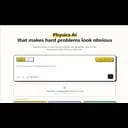
A web-based physics solver that accepts photo uploads and typed questions, returning step-by-step explanations with free-body diagram generation for force analysis.

FreemiumAI Education Assistantphysicsai.chat
Visit

Physics AI Solver is a Freemium AI tool available on Web-based physics problem solver with step-by-step explanations and free-body diagram generation. As of Jul 16, 2026, 10 of 10 public claims about it are backed by cited sources on this page.

Pricing
Freemium
Platforms
Web-based physics problem solver with step-by-step explanations and free-body diagram generation
Verified claims
10/10
Alternatives
3
AIGCList editorial score
6.2
Last verified
Jul 16, 2026

Decision summary

Solving physics problems with step-by-step guidance and visual diagrams

Physics students seeking on-demand problem-solving assistance

Best for

  • Students needing physics-specific visual explanations
  • Occasional homework help with free-body diagrams
  • Self-study with guided step-by-step solutions

Watch out for

  • Free tier capped at 7 conversations per month
  • No disclosed accuracy benchmarks or AI model details
  • Credit-based pricing may not suit heavy daily users

Overview

Physics AI is a web-based physics problem solver that accepts both photo uploads and typed questions, returning step-by-step explanations for each submitted problem. According to its official homepage, the tool generates free-body diagrams with vector arrows to illustrate tension, friction, and gravity components acting on objects — a feature that sets it apart from general-purpose AI assistants and positions it as a specialized physics-learning aid.

The platform operates on a credit-based freemium model structured across three tiers. The free tier includes 7 credits per month, which the vendor equates to approximately 7 conversations, along with Basic Mode and image upload capability. The Plus tier, at 500 credits per month, adds Guided Mode, visual explanations, priority reply, and access to what the vendor describes as advanced AI models. The Premium tier, at 1,200 credits per month, further extends these benefits with top-priority reply positioning, early access to new features, and feedback priority that gives subscribers influence over the product roadmap. The credit model means every problem submission counts against a monthly allowance, making the free tier suitable only for very occasional use and the paid tiers a consideration for students with regular physics coursework.

Physics AI falls within the broader AI Education Assistant landscape, where specialized tools increasingly compete with general-purpose platforms. Compared to alternatives like Gauth, which covers multiple subjects including mathematics and chemistry, Physics AI narrows its scope exclusively to physics. This focus enables the free-body diagram feature, which translates abstract force concepts into visual representations — a capability that general multi-subject solvers typically do not offer. Similarly, LearnFast AI targets the same physics-solving niche, suggesting a growing market for subject-specific AI tutoring tools.

The tool is designed for students who need on-demand physics help without committing to a human tutor or scheduled sessions. Its image upload feature allows users to photograph textbook or worksheet problems directly, reducing the friction of typing complex physics notation. The Guided Mode on paid plans, as described by the vendor, walks users through solution steps interactively rather than simply presenting final answers. This pedagogical approach — showing how forces act on objects through vector diagrams — is intended to support conceptual understanding rather than answer-copying, though independent verification of the guidance quality is not available from the homepage alone.

The free tier's 7-credit monthly cap presents a practical limitation for active students. A single problem submission consumes one credit regardless of complexity, and once the monthly allocation is exhausted, users must either wait for the next billing cycle or upgrade to a paid plan. Students taking multiple physics courses or preparing for exams may find the free tier insufficient within days. The paid tiers remove this constraint but introduce a recurring cost that competes with textbook solutions manuals, human tutoring services, and free general-purpose AI chatbots.

The vendor does not publicly disclose the specific AI model powering the solver, nor are accuracy benchmarks, error-rate statistics, or independent evaluation results available on the homepage. This opacity makes it difficult for potential users to assess solution reliability without conducting their own hands-on testing. Additionally, the platform appears to be web-only with no mention of mobile applications, offline access, or API integration for institutional use.

Editorial assessment

Score anatomy

The dimensions behind the editorial score. Open a row to inspect the judgment and its supporting context.

Scores indicate documented product strength, not a hands-on guarantee.

Information quality6.0

Step-by-step explanations and diagrams are described but no accuracy benchmarks, model disclosure, or independent evaluations are available from the vendor's homepage.

Vendor describes step-by-step explanations and free-body diagrams on the homepage but provides no third-party validation or error-rate data.

Ease of use7.8

Photo upload and text input offer low-friction problem submission. Web-based access requires no installation, though no mobile app is mentioned.

The homepage describes photo upload and text input as the two submission methods, with no setup or installation required.

Feature depth5.8

Free-body diagram generation is a strong differentiator, but the tool is narrowly scoped to physics with no multi-subject support, offline mode, or API access.

Free-body diagrams and Guided Mode are the standout features; beyond these, the feature set is standard for an AI problem solver.

Workflow fit7.0

Well-targeted for physics homework workflows with photo upload, but the credit cap may interrupt study sessions for active students.

The image upload feature aligns with how students encounter physics problems in textbooks, but the monthly credit limit could disrupt regular use.

Reliability5.0

No uptime guarantees, accuracy benchmarks, or model details are disclosed. Reliability must be inferred from vendor claims alone.

The homepage provides no information on solution accuracy, model identity, uptime history, or error handling.

Value5.5

The free tier is too limited for regular use. Paid tiers require a recurring subscription that competes with free AI chatbots and one-time textbook resources.

7 free credits per month is insufficient for active students; paid plans at 500 and 1,200 credits per month must justify their cost against free alternatives.

Evidence check

Public claims about this tool, each tagged with a verification status and its cited source.

1 source groups

physicsai.chat10
physicsai.chatVerifiedChecked Jul 16, 2026

Physics AI is a web-based online physics solver that provides step-by-step solutions to physics problems.

Users can upload a photo of a physics problem to receive help.

Users can type a physics problem directly into the solver.

The solver delivers step-by-step explanations for submitted physics problems.

The solver generates free-body diagrams with vector arrows showing tension, friction, and gravity components acting on objects.

The free tier provides 7 credits per month (approximately 7 conversations), Basic Mode, and image upload capability.

The Plus tier offers 500 credits per month, Guided Mode, visual explanations, priority reply, and access to advanced AI models.

The Premium tier offers 1,200 credits per month, Guided Mode, visual explanations, top-priority reply, advanced AI models, early access to new features, and feedback priority.

The product operates on a credit-based pricing model where each conversation consumes one credit from a monthly allowance.

Guided Mode provides interactive step-by-step problem-solving guidance and is available exclusively on paid Plus and Premium plans.

https://physicsai.chat/

Before you visit

Decision desk

The questions most worth resolving before you rely on the product or visit its official site.

01Is Physics AI free to use?

Physics AI offers a free tier with 7 credits per month, which the vendor equates to approximately 7 conversations. Beyond that, paid Plus and Premium plans are required for continued use.

Verify on official site

02How many physics problems can I solve each month?

The free tier provides 7 credits (7 conversations) per month. The Plus tier offers 500 credits, and the Premium tier provides 1,200 credits monthly. Each problem submission consumes one credit.

Verify on official site

03Does Physics AI show step-by-step work?

Yes, Physics AI provides step-by-step explanations for submitted problems. Paid plans also include Guided Mode, which walks users through the solution process interactively.

Verify on official site

Show 3 more questions
04Can Physics AI generate force diagrams?

Yes, the solver generates free-body diagrams with vector arrows to show how tension, friction, and gravity components act on objects, according to the vendor's description.

Verify on official site

05How do I submit a physics problem?

You can either upload a photo of a physics problem or type the problem directly into the solver's text input field.

Verify on official site

06What is the difference between Basic Mode and Guided Mode?

Basic Mode is available on the free tier and provides standard step-by-step solutions. Guided Mode, available on Plus and Premium plans, offers interactive guidance that walks users through each solution step rather than presenting the full answer at once.

Verify on official site

Read enough? Open Physics AI Solver to judge it yourself.

Visit Physics AI Solver

Explore the landscape

Continue exploring

Editorial alternatives

Different paths for a similar job

These tools were linked as editorial alternatives with a documented reason for the relationship.

01

Gauth

Gauth covers multiple STEM subjects including mathematics and chemistry alongside physics, making it suitable for students who need cross-subject homework support beyond physics alone.

View record
02

LearnFast AI

LearnFast AI targets the same physics-solving niche with a free offering, providing a direct comparison point for students evaluating physics-specific AI tools.

View record
03

College Tools

College Tools offers a broader academic toolkit spanning multiple subjects and assessment formats, appealing to students who prefer a single platform for all coursework.

View record
View all Physics AI Solver alternatives